
Huawei, TP-Link Settle UPC Munich Case

May 6, 2026
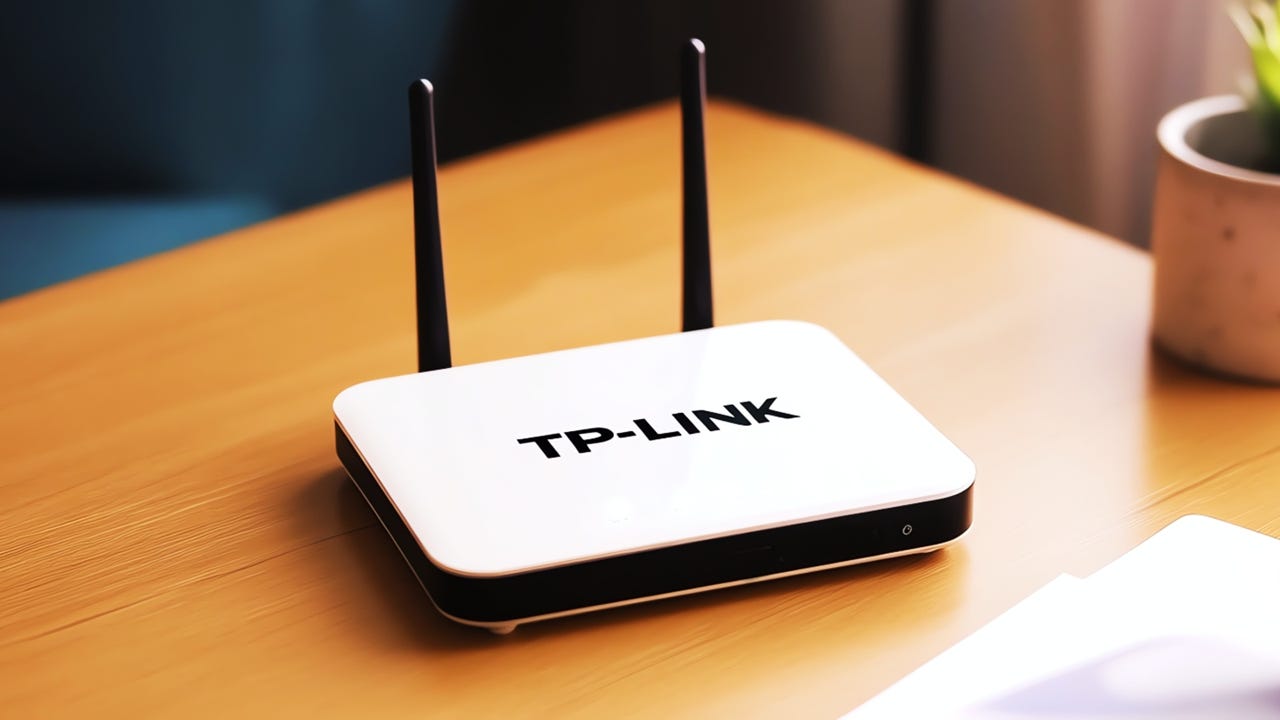
On May 5, 2026, the UPC Munich Local Division made public a decision in the patent infringement case Huawei v. TP-Link. As the parties had reached a settlement, both Huawei and TP-Link filed applications to withdraw the proceedings on April 30, 2026. Presiding Judge Dr. Matthias Zigann granted the mutual withdrawal of the patent infringement action and the counterclaim for revocation.

As of press time, Huawei and TP-Link have not confirmed to PRIP whether their settlement is global or limited to the UPC case.
The dispute relates to Wi-Fi 6 licensing terms. Huawei filed suit against TP-Link at the UPC Munich LD on August 27, 2025. TP-Link then countered with a FRAND rate claim against Huawei in the High Court of England and Wales on September 5, 2025. The parties also face patent disputes in China, where TP-Link has filed invalidity challenges against two of Huawei’s Wi-Fi 6 patents (PRIP Wechat, July 22, 2025).
UK Interim Licensing: A Turning Point
The UPC Munich LD scheduled the interim conference for December 11, 2026, with the oral hearing set for March 16, 2027. In comparison, the interim licensing ruling handed down by the UK court on January 30 has had a much bigger impact on both parties.
In this case, Huawei became the first licensor to seek an interim licence. Judge Meade ruled that the USD 12 million FRAND rate proposed by TP-Link would serve as the non-refundable cash portion under Huawei’s interim licensing terms.
This ruling may have advanced settlement negotiations between the two sides, and led to the settlement of the UPC Munich case.
Warner/Paramount v Nokia: A Comparable Case
UK court filings updated on May 1 show neither side has withdrawn its claims.
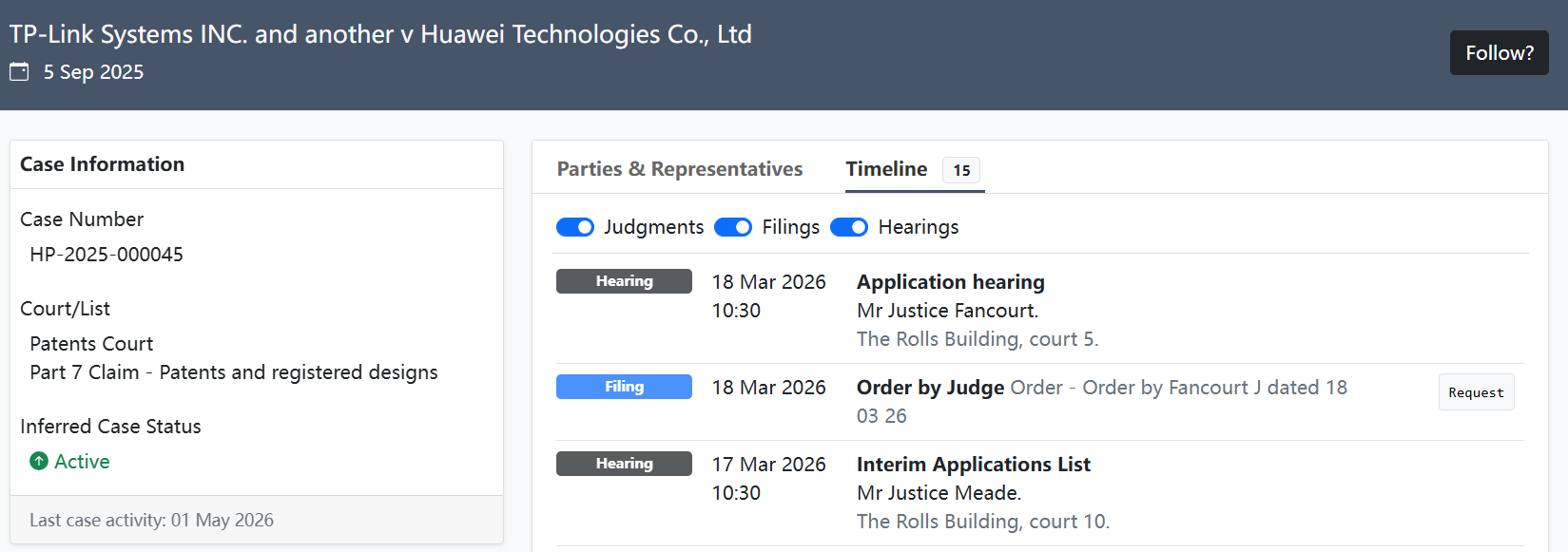
This means the case may be like the Warner/Paramount v Nokia case: After Nokia agreed to interim licensing terms set by the UK court, it dropped its lawsuits against Warner and Paramount in the U.S., Germany, Brazil and the UPC.
Nokia explained to PRIP on March 31 why it dropped lawsuits in several jurisdictions:
Nokia has not settled with Warner Bros or Paramount. To resolve the commercial dispute Nokia offered good faith terms that:
——provide for the use of Nokia’s video technologies in Warner Bros’ and Paramount’s streaming services
——enable the UK court to determine the appropriate royalty for a license scope that is customary to what Nokia have agreed with Warner Bros’ and Paramount’s peers in the video streaming space
——and provides for the UK court to set an interim payment until the appropriate royalty can be adjudicated.
Warner Bros and Paramount accepted this offer. The three parties have therefore agreed to halt ongoing litigation in other jurisdictions.
This is why PRIP questions whether the two parties reached a global settlement or only settled the UPC case.
Conclusion
Ending the litigation at an early stage would be a better option for TP-Link, especially by joining Sisvel directly.
As Eric Stasik observed in his commentary on the case, TP-Link would have been better off securing a licence from the Sisvel patent pool in the first place. For just an extra $0.10 per device, it could have obtained coverage for Wi‑7 as well. He expects TP-Link to reach the same conclusion: stop following legal advice—from which only lawyers stand to benefit—and settle by taking a Sisvel pool licence ahead of trial.