
UPC Issues Permanent Injunction, Recall and Destruction Orders Against Siemens Healthineers in Three EU States; Proportionality Defence Rejected


June 11, 2026
The Düsseldorf Local Division of the UPC has issued a landmark ruling in favor of U.S. medical technology company Hologic in its patent infringement case against Siemens Healthineers. The court found that Siemens’ MAMMOMAT B.brilliant 3D mammography system launched in late 2023 infringes Hologic’s European Patent EP2352431 and dismissed Siemens’ counterclaim for revocation. The court ultimately granted a permanent injunction along with comprehensive remedies including recall and destruction

The Parties
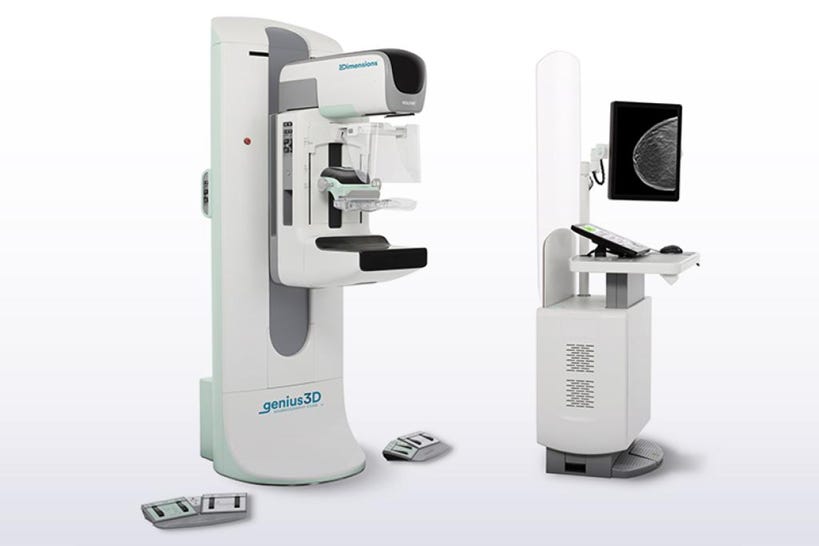
Hologic, Inc. , the claimant, is a global women’s health medical technology company headquartered in Massachusetts, USA, focusing on breast cancer screening, diagnosis and gynaecological surgery. Hologic is a pioneer in digital breast tomosynthesis (3D mammography) technology. After receiving FDA approval in 2011, its Genius™ 3D Mammography™ platform has captured approximately 70% of the global 3D mammography market.
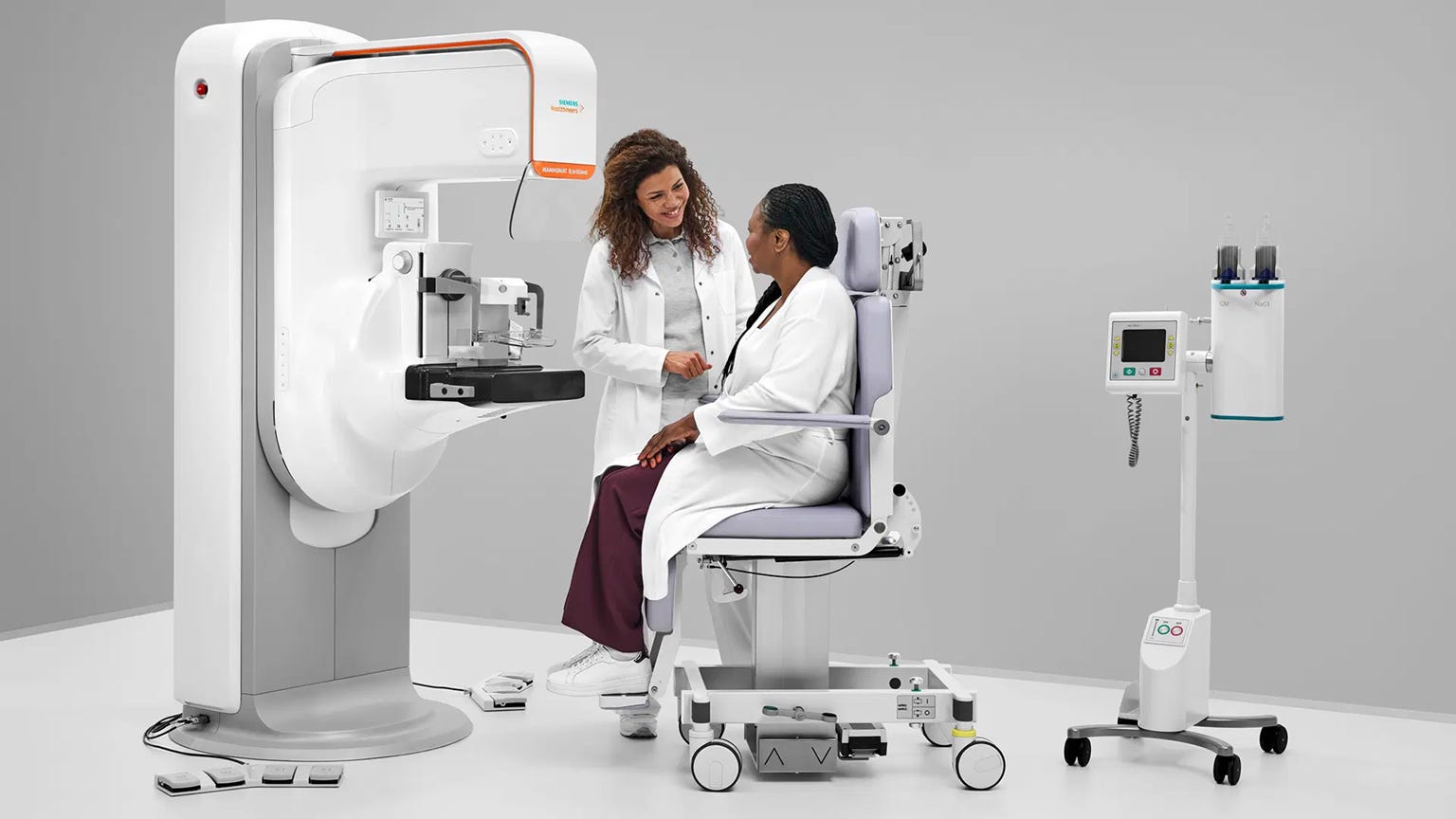
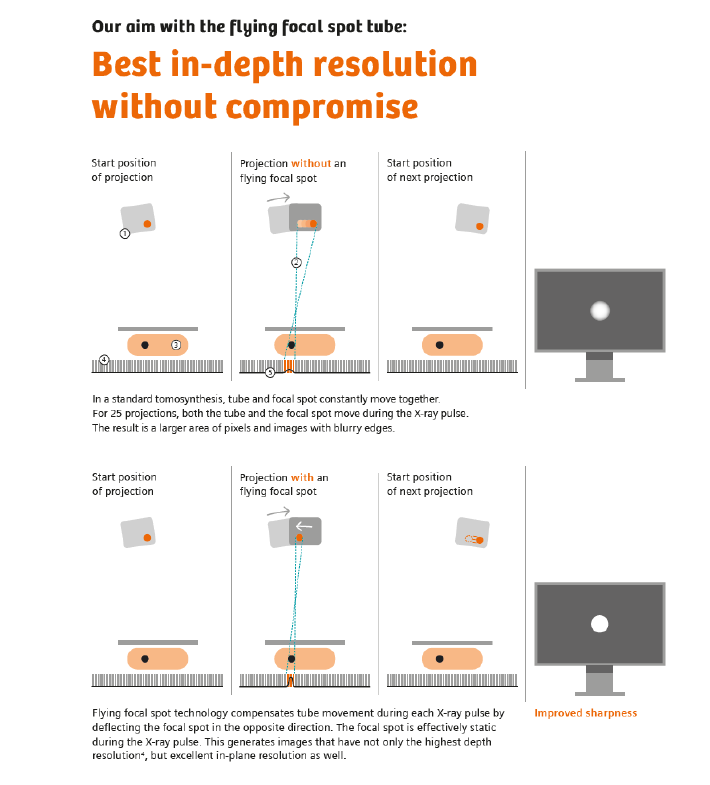
Siemens Healthineers AG, the defendant, was spun off from the Siemens Group in 2016 and its product portfolio covers medical imaging, diagnostics and therapy. The accused product (MAMMOMAT B.brilliant) in this case is the first completely redesigned mammography platform from Siemens Healthineers in more than a decade, launched in the autumn of 2023. The “Flying Focal Spot” technology that Siemens promoted as a key feature of this product became the crucial element in the court’s infringement finding.
The Patent in Suit: Siemens’ EPO Challenge Failed
In December 2024, Hologic filed an infringement action before the UPC Düsseldorf LD, alleging that Siemens Healthineers infringed EP2352431 entitled “Method and system for controlling x-ray focal spot characteristics for tomosynthesis and mammography imaging”.
PRIP checked the status of this patent via the EP Register and found that Siemens was aware of the strength of Hologic’s patent. Shortly after the patent was granted by the EPO on 19 July 2018, Siemens filed an opposition on 14 May 2019. The EPO Opposition Division rejected Siemens’ opposition on 5 August 2021. Siemens filed an appeal, and the EPO Board of Appeal dismissed the appeal on 12 April 2024, upholding the patent’s validity. With this favourable ruling in place, Hologic initiated patent infringement proceedings before the UPC.
Key Findings of the Court
(1) Claim Construction
The court adopted a moderately broad interpretation, favouring the patentee. For example, a “focusing cup” need not be a perfect cylinder, and the controller may be external software. Feature 4.1 only requires the effective focal spot to “appear” relatively fixed, absolute mathematical precision is not required, and even an “inferior embodiment” still infringes.
(2) Validity: Rejecting Siemens’ Counterclaim for Revocation
In response to Siemens’ counterclaim for revocation, the court confirmed the validity of the patent. On novelty, the court found that CC 4 does not disclose moving the static focal spot within the X‑ray tube. On inventive step, the court held that Siemens’ attack based on CC 7 was based on hindsight and that CC 7 itself teaches away from 3D tomosynthesis.
(3) Infringement: Admission of Infringement via Marketing Materials
Siemens’ own marketing materials played a decisive role. The court found that the description of Siemens’ “flying focal spot” operation was substantially identical to feature 4.1 of the patent claim, constituting an admission of infringement. Even if Siemens’ own measurement data showed minor deviations, that did not prevent the realisation of feature 4.1.
(4) Inferior embodiment still infringes
The court confirmed that an “inferior embodiment” can still infringe: even if the accused product does not fully achieve the technical effect described in the patent, as long as it literally realises all features of the claim, it constitutes a literal infringement.
Other Defences and the Proportionality Debate
Siemens also raised several other defences that were closely watched as potential ways to avoid an injunction.
(1) Proportionality of an injunction
Siemens argued that the accused product is the only or significantly better early breast cancer detection device, and that an injunction would harm patient interests. The court rejected this, noting that there are several comparable 3D tomosynthesis systems on the market, including Siemens’ own MAMMOMAT Revelation, Fujifilm’s AMULET Innovality, and Planmed’s Planmed Clarity 3D. The patient interest exception applies only where the product is the sole available treatment method.
(2) Software modification as an alternative
Siemens contended that it could avoid infringement by disabling the “flying focal spot” function via a software update, thus making a recall unnecessary. The court held that a software modification must objectively ensure that the infringing state cannot easily be restored. But, Siemens retains full control over the firmware and could at any time restore the infringing function through an update. Siemens did not provide sufficiently reliable technical safeguards. Therefore, the proposed software modification does not justify cancelling the recall.
(3) Private prior use right
Siemens claimed a private prior use right based on a invention notification dated 17 October 2008 (filed about one month before the patent’s priority date) and subsequent development. The court found that Siemens failed to prove that it had made a firm and final decision to commercialise the invention before the priority date. The invention notification was just one month earlier, and the subsequent testing and projects spanned 15 years before market launch, with scope reductions in between. There was no sufficient evidence of actual use or immediate preparatory acts before the priority date.
(4) Positive right of use
Siemens argued that it had a positive right of use based on earlier patents, allowing it to freely practice the accused product. The court held that German patent DE 10 2009 009 052 B4 had a filing date of 17 February 2009, later than the patent’s priority date, and thus could not serve as an earlier right. As for Philips’ EP2262428, that patent did not disclose the “focusing cup” feature that the patent in suit possesses, whereas a positive right of use is strictly limited to the teaching of the earlier patent and cannot cover additional features of the later patent.
Remedies Granted
(1) Permanent injunction
The injunction covers the territories of Germany, France and the Netherlands, prohibiting the making, offering, placing on the market, using, importing, or stocking for those purposes the infringing product. Violations are subject to a penalty payment of up to €10,000 per infringement.
(2) Information and accounting
The claimant is entitled to information regarding the infringing products. Siemens must provide this information within two months, failing which a recurring penalty payment of up to €10,000 per day may be imposed.
(3) Recall
Siemens must recall from commercial channels all infringing products placed on the market in Germany, France and the Netherlands since 15 August 2018.
(4) Destruction
Infringing products directly or indirectly in Siemens’ possession or ownership must be destroyed.
(5) Costs
The costs of the infringement proceedings are to be borne 20% by Hologic and 80% by Siemens (jointly). The counterclaim for revocation costs are borne entirely by Siemens.
Hologic is represented by Dr Thure Schubert, Christian Leopold Zapp, Arnold Asmussen, Dr Christoph Eisenmann of Vossius.
Siemens Healthineers is represented by Dr Matthias Meyer, Dr Daniel Misch, Dr Felix Harbsmeier, Cameron Walker of Bird & Bird.